CASE REPORT |
https://doi.org/10.5005/jihr-11055-0032 |
A Modified Technique for Fabrication of Inverted U-shaped Acrylic Stoppers for Neutral Zone Recording in Complete Dentures
1–4Department of Prosthodontics and Crown and Bridge, Late Shri Yashwantrao Chavan Medical Memorial and Rural Development Foundation's Dental College and Hospital, Ahilyanagar, Maharashtra, India
Corresponding Author: Pranjal Patil, Department of Prosthodontics and Crown and Bridge, Late Shri Yashwantrao Chavan Medical Memorial and Rural Development Foundation's Dental College and Hospital, Ahilyanagar, Maharashtra, India, Phone: +91 9702480780, e-mail: [email protected]
Received on: 11 February 2026; Accepted on: 26 May 2026; Published on: 30 June 2026
ABSTRACT
Aim and background: To describe a modified clinical technique using inverted U-shaped acrylic stoppers to stabilize neutral zone recording material and maintain the established vertical dimension during complete denture fabrication in patients with severely resorbed ridges.
Technique: An accurately adapted mandibular record base was fabricated using autopolymerizing acrylic resin. Inverted U-shaped acrylic stoppers were incorporated onto the mandibular record base to function as vertical stops during neutral zone recording. Moldable neutral zone recording material was adapted around the acrylic stoppers, and functional movements were performed intraorally to dynamically mold the material. The stabilized neutral zone record obtained was used for tooth arrangement and contouring of polished denture surfaces.
Conclusion: The incorporation of inverted U-shaped acrylic stoppers provides a simple, stable, and clinically effective method for neutral zone recording in complete denture fabrication. This modification improves stabilization of the recording material, maintains the vertical dimension during functional movements, and enhances the accuracy and reproducibility of the neutral zone record.
Clinical significance: The use of inverted U-shaped acrylic stoppers during neutral zone recording improves stabilization of the recording material and preserves the vertical dimension, thereby enhancing denture stability, retention, function, and patient comfort, particularly in patients with severely resorbed mandibular ridges.
Keywords: Case report, Complete denture, Complete denture prosthodontics, Denture stability, Neutral zone, Neutral zone recording, Resorbed ridge
How to cite this article: Patil P, Bhatia AP, Dhange B, et al. A Modified Technique for Fabrication of Inverted U-shaped Acrylic Stoppers for Neutral Zone Recording in Complete Dentures. J Integr Health Res 2026;3(1):50–53.
Source of support: Nil
Conflict of interest: None
INTRODUCTION
Successful complete denture therapy depends on achieving optimal stability, retention, and patient comfort, particularly in patients with severely resorbed residual ridges. One of the most critical determinants of denture stability is the neutral zone, defined as the potential space between the lips and cheeks on one side and the tongue on the other side.1 Positioning denture teeth and contouring polished surfaces within this zone minimizes destabilizing muscular forces and enhances the functional efficiency of the prosthesis.2,3
The neutral zone concept was first emphasized by Fish, who highlighted the role of muscular balance in denture stability.4 Later, Beresin and Schiesser formalized neutral zone impression techniques using functional molding procedures to accurately record this zone.5 Despite their clinical importance, conventional neutral zone recording techniques often present challenges such as inadequate stabilization of recording materials, difficulty in maintaining vertical dimension, and increased technique sensitivity.
Various modifications have been proposed, including the use of wire loops, tissue stops, and acrylic frameworks, to support the recording material during functional movements. However, these methods may be prone to distortion, displacement, or difficulty in fabrication, potentially compromising the accuracy of the neutral zone record. Recent studies have highlighted limitations of conventional techniques, including instability of recording materials and difficulty in maintaining the vertical dimension during functional movements. Shetty et al. demonstrated challenges in stabilizing neutral zone materials in severely resorbed ridges,6 while Chandra et al. reported technique sensitivity associated with functional molding procedures.7
Therefore, the aim of this technical report is to describe a modified technique that uses inverted U-shaped acrylic stoppers incorporated into the record base to enhance stabilization of the neutral-zone recording material and to maintain the established vertical dimension during functional movements.
CLINICAL PRESENTATION
The present technique was performed on a single completely edentulous patient reporting difficulty in retention and stability of existing dentures.
The patient was a 56-year-old male with a history of long-term edentulism. Clinical examination revealed a severely resorbed mandibular residual ridge (Atwood class V) and a moderately resorbed maxillary ridge. The mandibular ridge exhibited reduced height and width with poor muscular control, indicating the need for neutral zone recording to enhance denture stability.
Poor muscular control was assessed clinically based on reduced cheek and lip tone, impaired control during functional movements, and instability of previous dentures during speech and swallowing.
Written informed consent was obtained from the patient for participation in the procedure and for the use of clinical data and images for academic purposes while maintaining anonymity.
As this report describes a clinical technique without experimental intervention, institutional ethical approval was not required. All procedures adhered to ethical standards, and informed consent was obtained.
Technique
-
Definitive impressions were made, and master casts were obtained (Fig. 1). Well-adapted maxillary and mandibular record bases were fabricated using autopolymerizing acrylic resin (DPI RR Cold Cure, Dental Products of India Ltd., Mumbai, India).
-
Jaw relations were recorded at the established vertical dimension. The occlusal rims were subsequently reduced to the level of the record base to create space for neutral zone recording material.
-
Inverted U-shaped acrylic stoppers were fabricated directly on the mandibular record base using autopolymerizing acrylic resin.
-
A total of three acrylic stoppers were positioned in a tripod configuration along the crest of the mandibular ridge within the neutral zone area (Fig. 2):
-
One stopper in the anterior region.
-
Two stoppers in the premolar–molar regions.
-
-
The acrylic stoppers were fabricated with an approximate thickness of 2 mm and adjusted intraorally to maintain the established vertical dimension without interfering with tongue space or functional movements.
-
A moldable material, such as impression compound (DPI Pinnacle Impression Compound, Dental Products of India Ltd., Mumbai, India), was softened and adapted around and between the acrylic loops.
-
The mandibular record base was inserted intraorally, and the patient was instructed to perform functional movements to allow dynamic molding of the material (Fig. 3). Functional movements were performed for approximately 5–7 minutes, with repeated cycles of swallowing, speech, and lip movements.
-
After complete setting of the material (Fig. 4), the record was retrieved and evaluated for dimensional stability and functional accuracy.
-
A silicone index was made to preserve the neutral zone record, which was then used as a guide for tooth arrangement and polished surface contouring (Fig. 5).
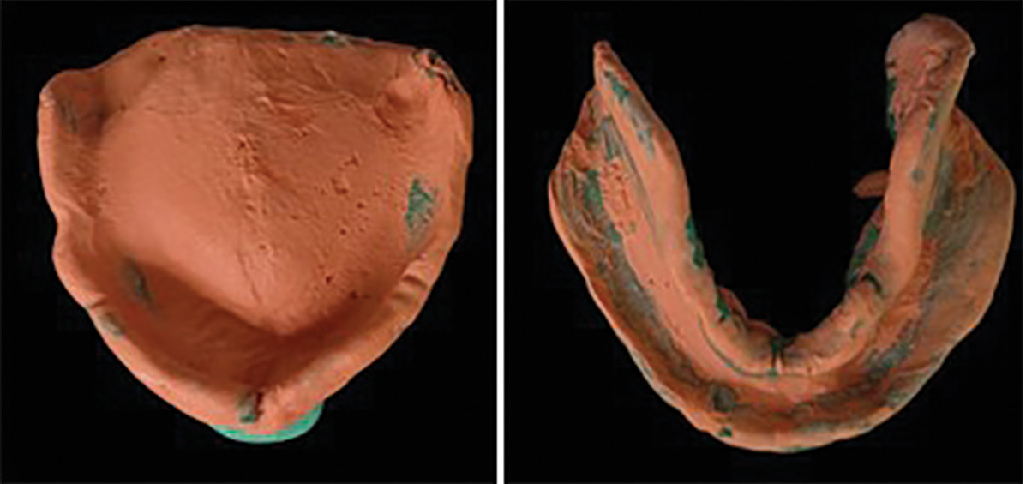
Fig. 1: Well-adapted maxillary and mandibular record bases fabricated on the definitive casts prior to neutral zone recording
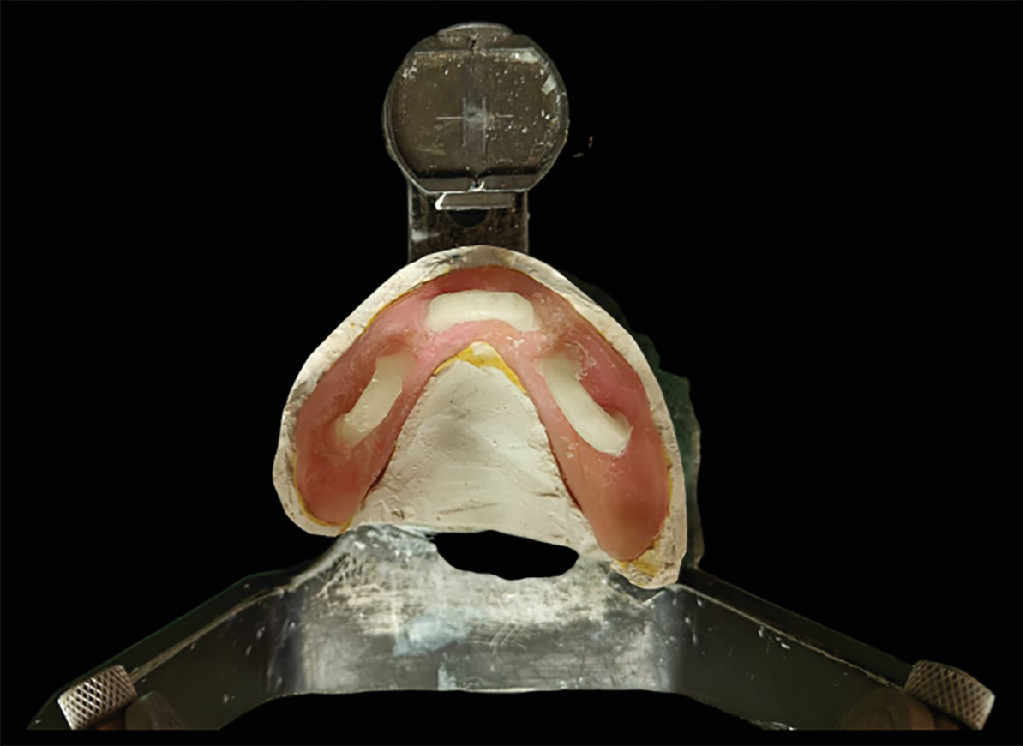
Fig. 2: Acrylic loops contoured in an inverted U-shape and embedded on the record base to act as stoppers for maintaining vertical dimension
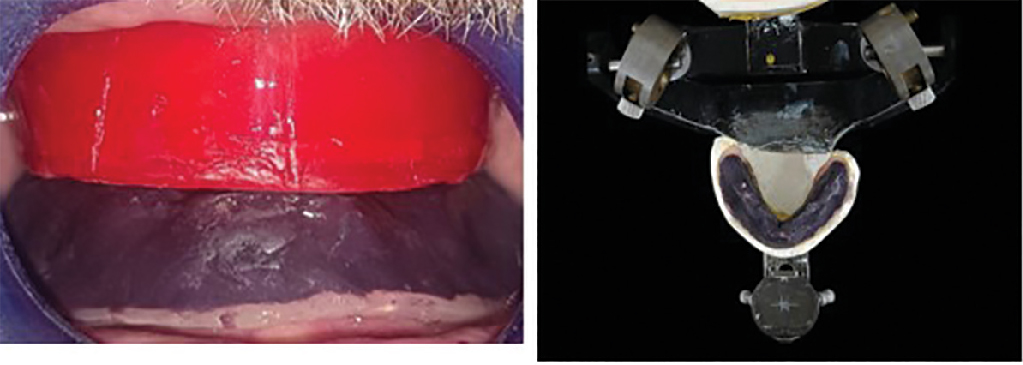
Fig. 3: Moldable material applied around the inverted U-shaped acrylic loops for functional molding of the neutral zone
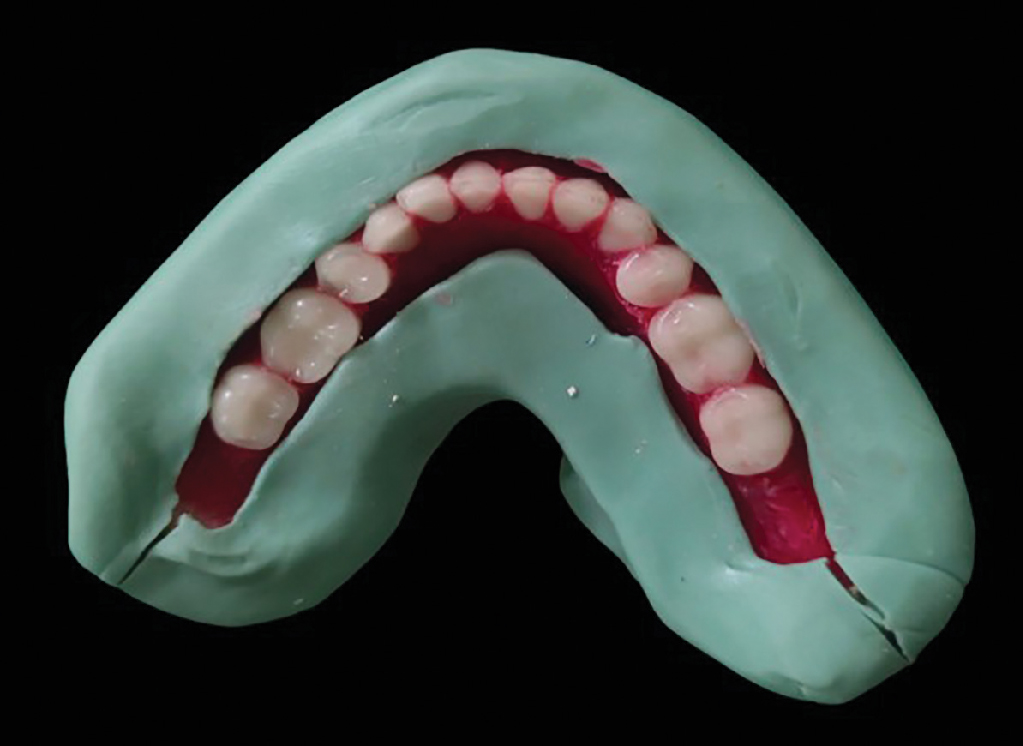
Fig. 4: Stabilized neutral zone record obtained after setting of the recording material, ready for guiding tooth arrangement and polished surface contouring

Fig. 5: Final denture
DISCUSSION
Recording the neutral zone accurately is essential in complete denture fabrication, as it ensures harmonious interaction between the prosthesis and orofacial musculature, thereby improving stability, retention, and functional efficiency—especially in patients with severely resorbed ridges.8,9 The significance of muscular balance was first emphasized by Fish and later systematized by Beresin and Schiesser through functional impression techniques.4,5 Conventional methods typically employ wire loops, tissue stops, or acrylic frameworks to support moldable materials; however, these approaches are often technique-sensitive and may be associated with material displacement, distortion, and difficulty in maintaining the established vertical dimension, which can adversely affect denture function.10,11
The present technique utilizes inverted U-shaped acrylic stoppers incorporated into the record base, providing both mechanical support to the recording material and maintenance of vertical dimension. This dual function distinguishes it from conventional methods, where stabilization and vertical control are often achieved separately. The use of rigid acrylic stoppers offers improved resistance to deformation during functional movements and provides consistent reference points for tooth arrangement and polished surface contouring, contributing to better clinical outcomes.
However, the technique has certain limitations. Acrylic stoppers may be prone to fracture if inadequately reinforced, and improper positioning or excessive height may interfere with tongue space or muscle activity, leading to patient discomfort or inaccurate recording. The procedure also requires precise placement, making it technique-sensitive, and may slightly increase chairside time. Additionally, the findings are based on clinical observation from a limited number of cases without objective quantitative evaluation, which restricts generalizability. Further controlled clinical studies are required to validate the effectiveness and long-term benefits of this modified approach.
CONCLUSION
The use of inverted U-shaped acrylic stoppers represents a simple and effective modification for neutral zone recording in complete denture fabrication. The technique appears to provide improved stabilization of the recording material and assists in maintaining the established vertical dimension during functional movements. The patient was followed up for 1 month and reported improved denture stability and comfort.
However, these observations are based on clinical experience, and further controlled studies are required to substantiate their effectiveness and long-term clinical benefits.
Clinical Significance
The use of inverted U-shaped acrylic stoppers during neutral zone recording offers a practical and reproducible chairside technique that enhances stabilization of the recording material and preserves the established vertical dimension. This modification reduces technique sensitivity, saves clinical time, and improves the accuracy of tooth placement and polished surface contours, thereby contributing to better stability, function, and patient satisfaction in complete denture therapy.
DECLARATIONS
Ethical Approval
This article describes a clinical technique without experimental intervention; therefore, institutional ethics approval was not required.
Patient Consent Statement
Written informed consent was obtained from the patient. The patient consented to the use of their clinical data for academic and research purposes while maintaining confidentiality and anonymity.
Animal Studies
Not applicable.
Data Availability Statement
The data supporting the findings of this study are available from the corresponding author upon reasonable request. Patient-identifiable information has been anonymized to ensure confidentiality.
Author Contributions
Pranjal Patil: Conceptualization, Methodology, and Writing—original draft. Amrita Pandita Bhatia: Writing—review and editing. Bhagyashree Dhange: Supervision and Validation. Sourav Lolage: Data curation and Visualization. All authors have read and approved the final manuscript and agree to be accountable for all aspects of the work.
Acknowledgments
The authors acknowledge the support of the Department of Prosthodontics, Late Shri Yashwantrao Chavan Medical Memorial and Rural Development Foundation's Dental College and Hospital, Ahilyanagar, for providing clinical infrastructure and technical assistance. No external funding was received for this study.
Clinical Trial Registry Number
Not applicable.
PROSPERO Registry Number
Not applicable.
Supplementary Materials
Not applicable.
AI DISCLOSURE
No AI assisted tool was used for preparation of the manuscript.
ORCID
Pranjal Patil https://orcid.org/0009-0008-4036-1958
REFERENCES
1. The glossary of prosthodontic terms: ninth edition. J Prosthet Dent 2017;117(5S):e1–e105. DOI: 10.1016/j.prosdent.2016.12.001
2. Fahmy FM, Kharat DU. Influence of polished surface contours on complete denture stability. J Prosthet Dent 1990;63(2):196–201.
3. Patel J, Shah R. Role of polished surface contour in improving denture stability in resorbed ridges. J Prosthet Dent. 2023;129(2):215–220.
4. Fish EW. Principles of Full Denture Prosthesis. 6th ed. London: Staples Press; 1933.
5. Beresin VE, Schiesser FJ. The Neutral Zone in Complete Dentures. St. Louis: Mosby; 1973.
6. Shetty M, Shenoy K, Shetty S. Neutral zone approach for rehabilitation of severely resorbed mandibular ridge: A clinical report. J Indian Prosthodont Soc 2018;18(3):270–274.
7. Chandra S, Singh A, Gupta R. Neutral zone impression technique in complete denture fabrication for improved stability. J Prosthet Dent 2020;124(5):560–564.
8. Zarb GA, Bolender CL, Eckert SE, et al. Prosthodontic Treatment for Edentulous Patients: Complete Dentures and Implant-Supported Prostheses. 13th ed. St. Louis: Mosby; 2013.
9. Winkler S. Essentials of Complete Denture Prosthodontics. 3rd ed. New Delhi: AITBS; 2015.
10. Kaur S, Datta K, Gupta S. Management of severely resorbed mandibular ridge using neutral zone technique. J Prosthodont Res 2019;63(4):458–462.
11. Mishra R, Agarwal S. Influence of muscle function and neutral zone concept in prosthodontic rehabilitation of edentulous patients. J Prosthodont 2021;30(6):517–523.
________________________
© The Author(s). 2026 Open Access. This article is distributed under the terms of the Creative Commons Attribution-NonCommercial 4.0 International License (https://creativecommons.org/licenses/by-nc/4.0/). This license permits non-commercial use, distribution, and reproduction in any medium, provided the original author and source are credited, a link to the license is included, and any changes are indicated.