REVIEW ARTICLE |
https://doi.org/10.5005/jihr-11055-0026 |
Current Concepts and Emerging Therapies for Controlling Postoperative Swelling in Oral and Maxillofacial Surgery: A Narrative Review
1,3,4Department of Oral and Maxillofacial Surgery, Darshan Dental College and Hospital, Udaipur, Rajasthan, India
2Department of Public Health Dentistry, Narsinhbhai Patel Dental College and Hospital, Visnagar, Gujarat, India
Corresponding Author: Dishantkumar B Sonpal, Department of Oral and Maxillofacial Surgery, Darshan Dental College and Hospital, Udaipur, Rajasthan, India, Phone: +91 7623085870, e-mail: [email protected]
Received on: 16 March 2026; Accepted on: 09 April 2026; Published on: 30 June 2026
ABSTRACT
Background: Postoperative swelling is an inevitable inflammatory response following oral and maxillofacial surgery (OMFS). However, excessive edema can restrict mandibular movement, hinder functional recovery, complicate airway assessment, and increase patient discomfort. Achieving predictable surgical outcomes relies on effectively modulating this inflammatory response.
Aim: This educational review aims to evaluate both novel and established methods for reducing postoperative swelling and to examine their clinical applicability in modern oral and maxillofacial practice.
Methodology: A structured narrative review was performed using PubMed, Scopus, and Google Scholar, covering literature from January 2000 to August 2025. Relevant clinical studies were identified, screened, and qualitatively synthesized based on methodological quality and clinical relevance.
Conclusion: Current evidence supports a personalized, multimodal approach that integrates targeted pharmacological interventions, refined surgical techniques, adjunctive physical therapies, and objective postoperative monitoring. However, the establishment of definitive standardized protocols is limited by inconsistent study designs and outcome reporting. To develop reproducible, evidence-based practices that optimize recovery and enhance patient-centered care in contemporary OMFS, high-quality comparative research is essential.
Keywords: Anti-inflammatory agents, Facial edema, Maxillofacial surgery, Oral surgical procedures, Postoperative complications
How to cite this article: Sonpal DB, Bhanderi S, Agwani KM, et al. Current Concepts and Emerging Therapies for Controlling Postoperative Swelling in Oral and Maxillofacial Surgery: A Narrative Review. J Integr Health Res 2026;3(1):9–16.
Source of support: Nil
Conflict of interest: None
INTRODUCTION
Importance of Swelling Management in Oral and Maxillofacial Surgery
One of the most predictable but clinically significant side effects of oral and maxillofacial surgery (OMFS) is postoperative swelling. Excessive swelling can hinder airway assessment, limit mandibular function, exacerbate discomfort, and delay rehabilitation, even though inflammatory edema is a natural reaction to tissue trauma. In orthognathic procedures, implantology, third-molar surgery, and trauma management, where functional restoration and postoperative comfort are essential to treatment outcomes, these implications are especially pertinent. In order to improve the effectiveness and quality of postoperative recovery, modern OMFS thus places a great deal of emphasis on strategic perioperative measures that regulate inflammatory responses.1 Postoperative swelling following third molar surgery has been reported in up to 90% of cases, highlighting its clinical significance.
Biological Basis of Postoperative Swelling
An inflammatory cascade that starts as soon as a surgical injury occurs causes swelling. When tissue is disrupted, mast cells become activated and release inflammatory cytokines, prostaglandins, and bradykinin. These substances increase vascular permeability and make it easier for plasma to leak into the extracellular space.2 Because of its dense lymphatic networks, rich vascularity, and the extensive soft-tissue mobilization necessary for OMFS, the orofacial region is particularly vulnerable. Extended operative time, bone removal, prolonged retraction, and thermal damage from rotating instruments can all exacerbate local inflammatory reactions. Edema is gradually reduced by lymphatic clearance after peak swelling, which typically happens between 48 and 72 hours. Therefore, as shown schematically in Figure 1, effective management must address both the mechanical and biochemical mediators of postoperative swelling.
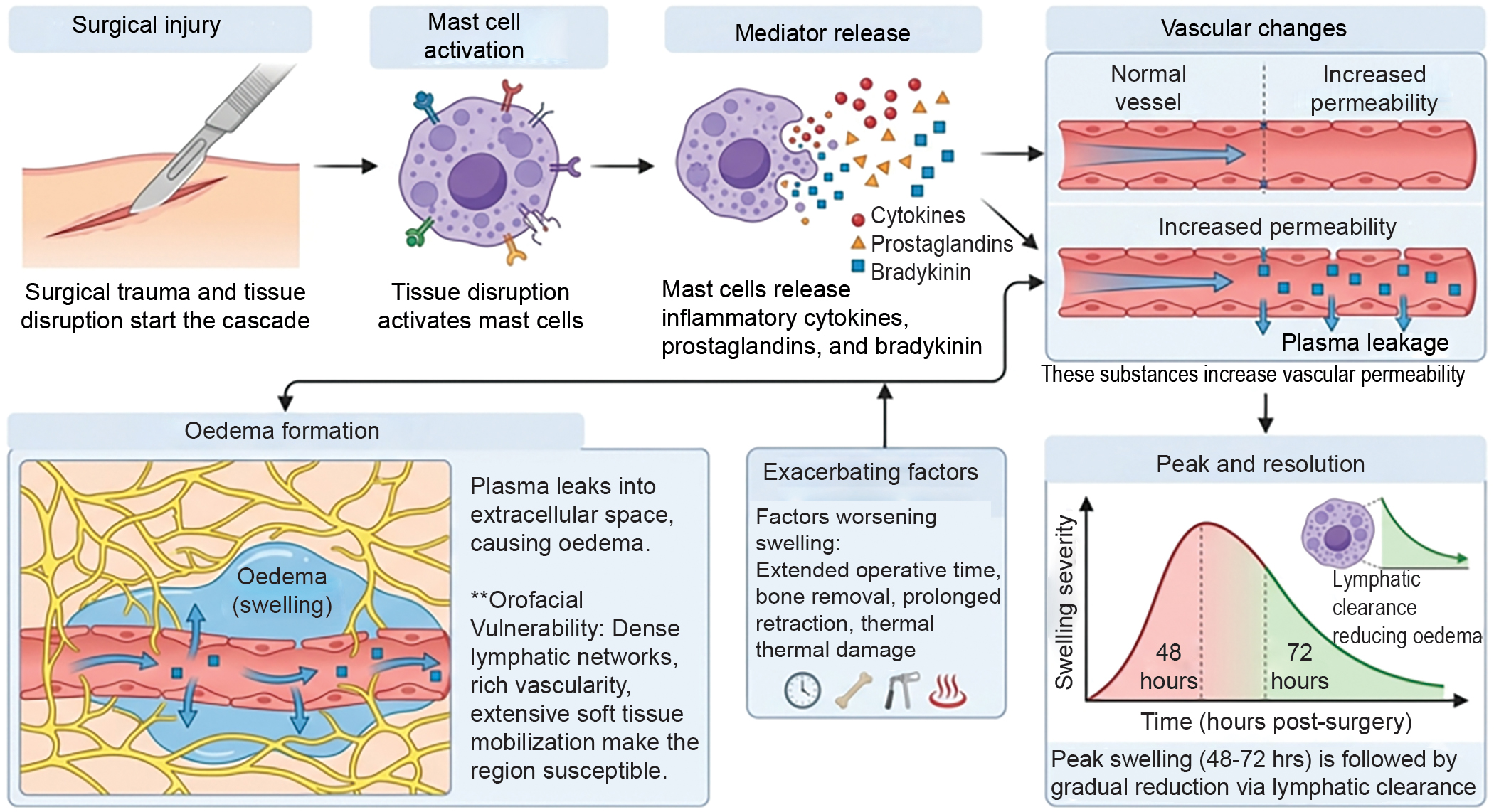
Fig. 1: Biological basis of postoperative swelling
Preoperative Interventions
-
Corticosteroid prophylaxis: Corticosteroids remain the most robust pharmaceutical option for reducing postoperative inflammation due to their inhibitory effects on phospholipase A₂ and subsequent suppression of arachidonic-acid metabolites. Schultze-Mosgau et al. demonstrated significant reductions in swelling and discomfort following preoperative methylprednisolone administration in third-molar surgery.1 Antonelli et al. later confirmed the efficacy of single-dose prednisone in reducing facial swelling, with objective volumetric measurements supporting its clinical value.2 Mojsa et al. further established the dose-dependent benefits of dexamethasone, reinforcing its widespread adoption in OMFS protocols.3 Corticosteroids are most commonly administered as a single preoperative dose, with dexamethasone typically ranging from 4 to 8 mg given orally, intramuscularly, or intravenously approximately 1 hour before surgery. Alternatively, methylprednisolone (40–125 mg IV) may be used depending on procedural complexity. Evidence suggests that preoperative administration provides more effective control of postoperative edema and trismus compared to delayed dosing.
-
Nonsteroidal anti-inflammatory drugs (NSAIDs): NSAIDs provide both analgesic and anti-inflammatory effects by inhibiting cyclooxygenase pathways responsible for prostaglandin synthesis. Sortino and Cicciù emphasized their importance in attenuating early inflammatory symptoms.4 Sánchez-Pérez et al. validated the value of dexketoprofen administered preoperatively, demonstrating improved postoperative comfort in implant patients.5 NSAIDs such as ibuprofen (400–600 mg orally) or dexketoprofen (25 mg orally) are commonly administered preoperatively or immediately postoperatively to inhibit prostaglandin synthesis and reduce early inflammatory response. These agents are often continued for 2–3 days following surgery to maintain analgesic and anti-inflammatory effects.
-
Enzyme-based therapies: Proteolytic enzymes present useful alternatives when corticosteroids or NSAIDs are unsuitable. Bromelain has shown favorable outcomes in reducing swelling, as reported by Singh et al.6 Serratiopeptidase has demonstrated potential in reducing postoperative swelling; however, the available evidence remains limited and less consistent compared to corticosteroids, which continue to represent the most reliable pharmacological option.7
The selection of pharmacological agents, including dosage, timing, and route of administration, should be individualized based on patient-specific factors, systemic conditions, and surgical complexity.
Intraoperative Swelling-control Techniques
-
Minimizing tissue trauma: Refined surgical technique remains a cornerstone of swelling control. Limiting tissue manipulation, optimizing retraction, controlling thermal generation, and employing adequate irrigation can substantially reduce inflammatory burden. Although difficult to quantify objectively, these principles underpin the effectiveness of pharmacological and physical interventions implemented later. The influence of surgical technique on postoperative swelling is widely acknowledged; however, consistent quantification is limited by variations in operator technique, extent of tissue manipulation, and lack of standardized assessment methods.
-
Cold saline irrigation: Cold saline irrigation has emerged as a simple yet effective method for modulating early inflammatory activity. Ronsivalle et al. reported that chilled saline applied during third-molar surgery significantly reduced postoperative edema.8 Jaiswal et al. supported these findings through a randomized trial demonstrating reductions in swelling and pain, confirming its value as an intraoperative adjunct.9
Postoperative Management Strategies
-
Cryotherapy: Cryotherapy remains a foundational measure due to its ability to reduce tissue temperature, induce vasoconstriction, and limit inflammatory mediator dissemination. Laureano-Filho et al. demonstrated significant reductions in edema and trismus following cryotherapy application after third-molar extraction.10 A systematic review by do Nascimento-Junior et al. further confirmed consistent evidence supporting its efficacy.11
-
Low-level laser therapy (LLLT): LLLT promotes cellular photobiomodulation, improves microvascular circulation, and reduces oxidative stress. Landucci et al. demonstrated significant reductions in postoperative swelling following LLLT.12 López-Ramírez et al. reported improved mouth opening and reduced edema with LLLT application.13 Petrini et al. showed that preoperative LLLT offers additional benefits, suggesting time sensitivity in therapeutic responses.14
-
Manual lymphatic drainage (MLD): MLD supports lymphatic clearance and reduces interstitial fluid accumulation. Van de Velde et al. documented meaningful improvements in swelling and comfort after third-molar removal.15 Li et al. reaffirmed its usefulness in OMFS procedures, particularly those involving extensive soft-tissue manipulation.16
-
Kinesio taping: Kinesio taping aims to elevate skin microscopically, enhancing lymphatic drainage. Lietz-Kijak et al. found that taping effectively reduced facial swelling following orthognathic surgery.17 However, Parreira et al. cautioned that evidence remains insufficient to recommend universal adoption.18
-
Adjunctive emerging therapies—ozone, PEMF, and hyaluronic acid: Ozone therapy has demonstrated promising reductions in swelling, comparable to LLLT, as shown by Kazancioglu et al.19 PEMF therapy, examined by Menini et al., provided notable improvements in swelling following implant surgery.20 Hyaluronic acid, reviewed by Miglani et al., offers anti-inflammatory and hydrating benefits.21 Al-Saadi et al. demonstrated significant reductions in postoperative swelling using hyaluronic acid in combination with chlorine dioxide.22
-
Antiseptics and antibiotics: Although primarily aimed at infection control, antibiotics and antiseptic rinses indirectly influence swelling by reducing infection-driven inflammation. Martín-Ares et al. demonstrated lower inflammatory symptoms in antibiotic-treated third-molar patients.23 Chen et al. observed improved postoperative comfort with antiseptic rinses following implant therapy.24
-
Aqua Titan patch: Aqua Titan technology represents a novel adjunct in postoperative recovery, utilizing titanium-infused polymer films thought to influence microcirculation and neuromuscular tone through biophysical interactions. Srivastava et al. demonstrated that the local application of Aqua Titan patches after mandibular third-molar surgery significantly reduced postoperative swelling and discomfort, suggesting a beneficial modulatory effect on tissue recovery.25 In addition, earlier work by Matsumoto et al. reported improvements in symptoms associated with temporomandibular muscular disorders following Aqua Titan application, reinforcing its potential to support postoperative soft-tissue healing in OMFS.26 Unlike pharmacological agents, Aqua Titan patches provide a noninvasive, low-risk option suitable for patients with contraindications to steroids or NSAIDs.
Digital Technologies in Postoperative Swelling Management
Digital tools increasingly support postoperative evaluation in OMFS. Three-dimensional facial scanners and smartphone-based photographic monitoring allow objective and remote assessment of swelling progression, assisting early identification of abnormal patterns such as infection or hematoma formation.2 Incorporating these technologies enhances postoperative surveillance and patient reassurance. Telemedicine platforms further enable clinicians to monitor swelling trends and intervene promptly without requiring in-clinic assessments.
Future research should prioritize multimodal combinations rather than single-intervention evaluations. Combining therapies such as pairing LLLT with Aqua Titan patches or integrating MLD with cold saline irrigation may produce synergistic benefits.3,6 Additionally, optimizing timing (pre versus postoperative application) may refine therapeutic impact. Emerging biophotonic and bioelectromagnetic modalities warrant exploration for their potential to influence cytokine activity and microvascular regulation.
All preventive and therapeutic modalities discussed are collectively summarized and illustrated in Figure 2 for structured clinical reference.
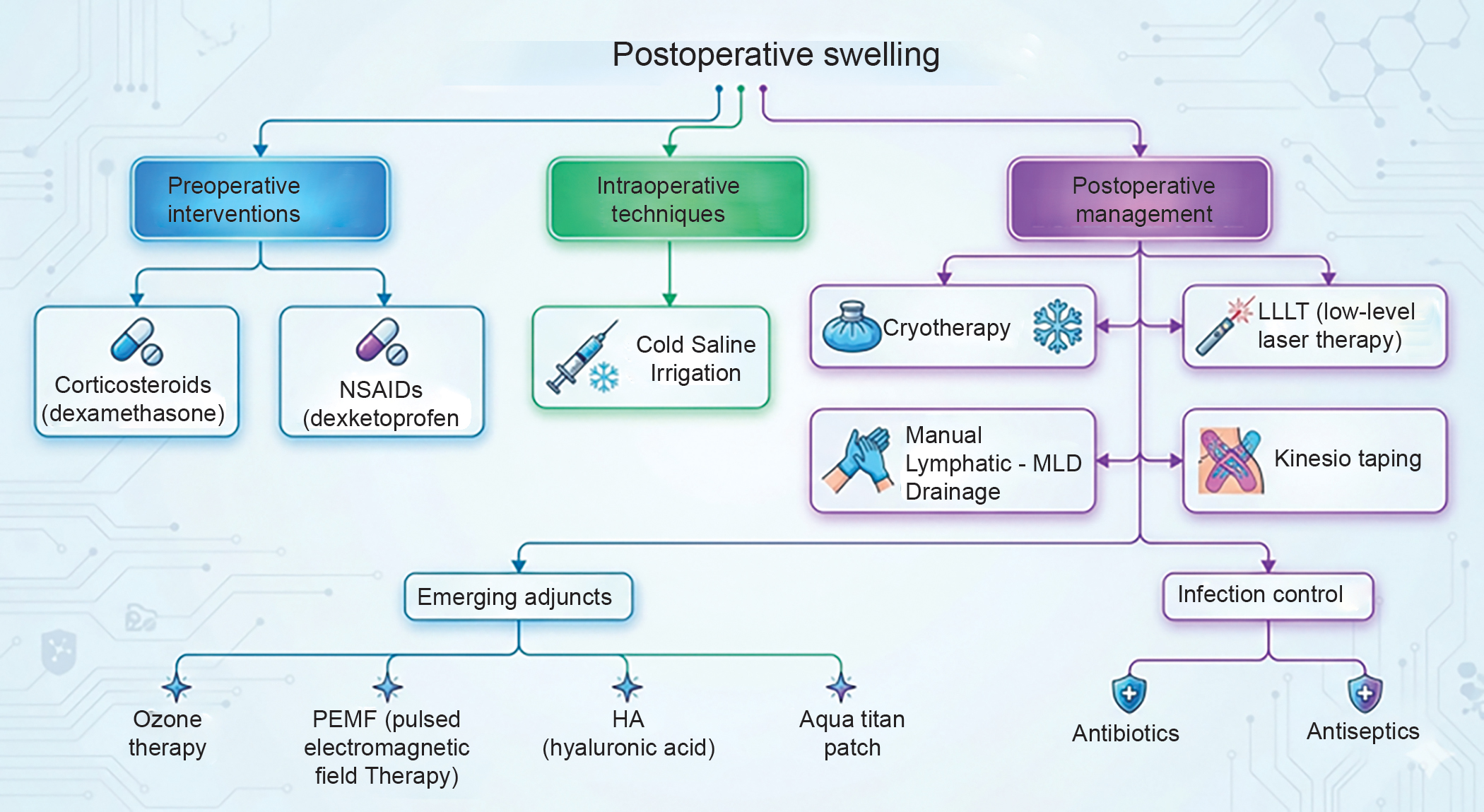
Fig. 2: Multimodal strategy for postoperative swelling control in OMFS
Recommendations for Oral and Maxillofacial Surgery Practice
An evidence-based, multimodal, and personalized swelling-management protocol is recommended. Preoperatively, the use of corticosteroids and NSAIDs should be considered when appropriate. Intraoperative strategies such as cold saline irrigation and careful surgical technique help reduce the early inflammatory response. Postoperatively, a broad range of therapies including cryotherapy, LLLT, MLD, enzyme-based agents, pulsed electromagnetic fields (PEMF), hyaluronic acid formulations, and Aqua Titan patches can be employed. Clinicians should customize treatment combinations based on patient-specific needs, procedural complexity, and systemic risk factors.
Despite the extensive use of various pharmacological and adjunctive modalities, there is currently no universally accepted, evidence-graded perioperative framework for postoperative edema control in OMFS.
The pharmacological, intraoperative, and postoperative interventions for controlling postoperative edema in OMFS are summarized in Figure 2.
This review therefore aims not only to summarize available interventions, but to critically appraise their relative strength of evidence and practical applicability within contemporary OMFS practice.
METHODOLOGY
This study was conducted as a narrative review with a structured and reproducible search methodology to critically evaluate current concepts and emerging therapies for the management of postoperative swelling in OMFS. A comprehensive literature search was performed using PubMed, Scopus, and Google Scholar, covering a defined timeframe from January 2000 to August 2025. This timeframe was selected to include both foundational literature and recent advances relevant to contemporary clinical practice. The inclusion of Google Scholar was justified to enhance retrieval of gray literature, recently published studies, and interdisciplinary research not consistently indexed in traditional databases. To address concerns regarding variability, only studies from peer-reviewed journals, indexed sources, and publications with demonstrable academic impact were considered, while nonscholarly and low-quality sources were excluded.
The search strategy incorporated both Medical Subject Headings and free-text keywords, applied through multiple Boolean combinations to ensure comprehensive retrieval. Core search terms included “postoperative swelling,” “facial edema,” “post-surgical edema,” “oral surgery,” “maxillofacial surgery,” “third molar surgery,” “implant surgery,” “orthognathic surgery,” “corticosteroids,” “NSAIDs,” “cryotherapy,” “cold therapy,” “laser therapy,” “low-level laser therapy,” “manual lymphatic drainage,” “kinesio taping,” “ozone therapy,” “pulsed electromagnetic field,” “hyaluronic acid,” and “Aqua Titan.” These terms were combined using Boolean operators such as AND, OR, and NOT in multiple iterative search strings to refine results, expand coverage, and exclude irrelevant studies.
The initial search yielded approximately 512 records, of which 86 duplicates were removed, resulting in 426 articles for title and abstract screening. During this stage, 298 studies were excluded due to irrelevance to oral and maxillofacial surgical procedures, absence of clinically meaningful outcomes (such as swelling, trismus, or pain), laboratory-based design, non-English language, or lack of generalizable clinical data. The remaining 128 full-text articles were assessed for eligibility, of which 102 studies were excluded due to inadequate methodological transparency, small or non-representative sample sizes, unclear or subjective outcome measures, or duplication of previously published data. Ultimately, 26 studies were included in the qualitative synthesis. The study selection process is illustrated in Figure 3.
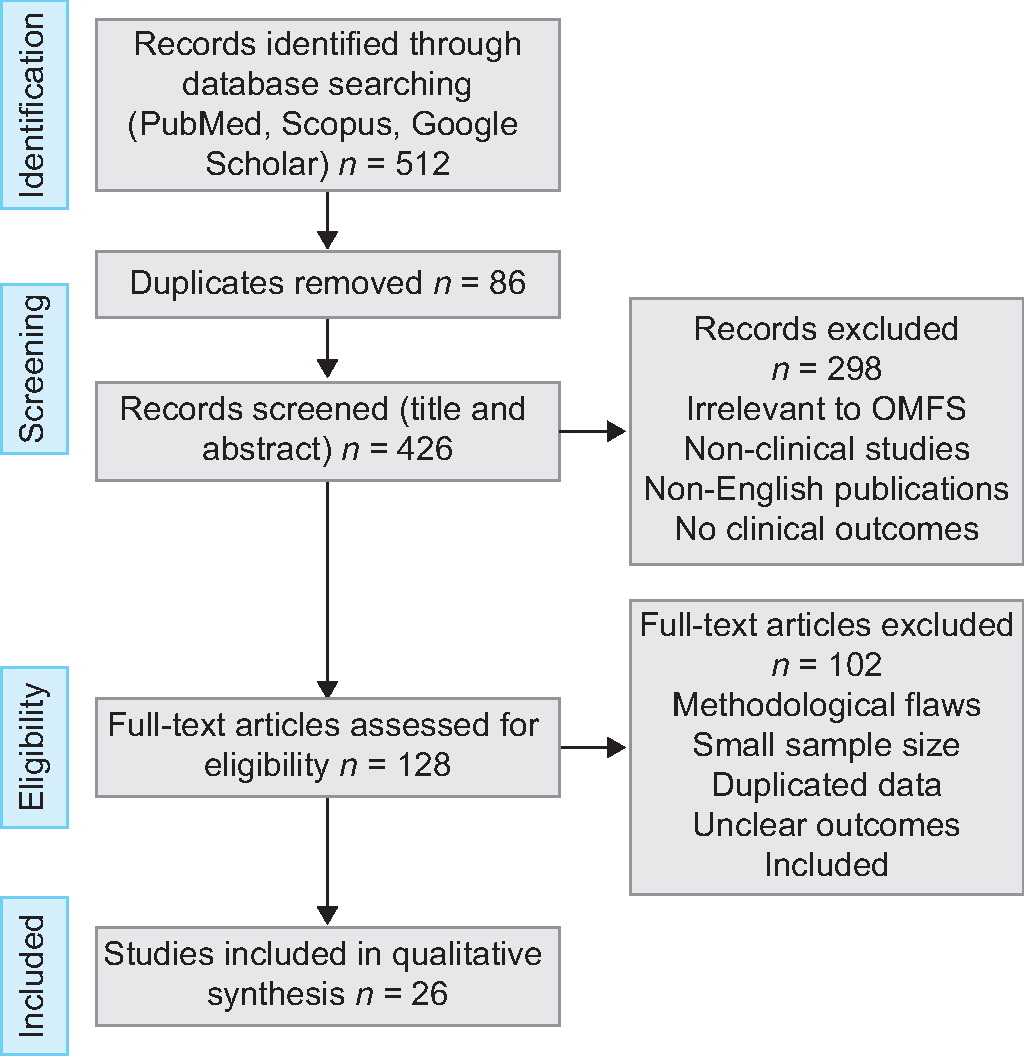
Fig. 3: The study selection process
Eligible studies included randomized controlled trials, cohort studies, case–control studies, and systematic reviews assessing interventions for postoperative swelling in procedures such as third molar surgery, implant placement, orthognathic surgery, and maxillofacial trauma. Study selection and data extraction were conducted independently by two reviewers (DKS and RM), with extracted variables encompassing study design, intervention characteristics, outcome measures, and key findings. Discrepancies in study selection or interpretation were resolved through discussion, and when consensus was not reached, a third reviewer (KA) was consulted to make final decisions by collective agreement.
Beyond methodological relevance, citation frequency and academic influence were also considered to prioritize well-established, widely validated evidence, while incorporating recent high-quality studies to maintain an up-to-date representation of emerging therapies. Although a formal risk-of-bias tool was not used due to the narrative review design, methodological quality was critically appraised based on study hierarchy, sample size adequacy, clarity and objectivity of outcome assessments, and consistency of findings. Potential biases including publication, selection, and reporting biases were acknowledged and considered as limitations during interpretation.
To improve clinical applicability and address variability in evidence strength, the included studies were categorized by levels of evidence: systematic reviews and randomized controlled trials as high-level evidence, prospective and retrospective studies as moderate-level evidence, and pilot or preliminary studies as lower-level evidence. Significant heterogeneity in study designs, intervention protocols, and outcome measures precluded quantitative meta-analysis; thus, a qualitative synthesis approach was employed to facilitate critical comparison and integration of findings. Additionally, studies lacking methodological clarity, relying solely on subjective outcomes without objective validation, or originating from nonindexed or nonpeer-reviewed sources were excluded, ensuring that the final synthesis reflects clinically relevant, reliable, and scientifically robust evidence.
DISCUSSION
In OMFS, postoperative swelling continues to be a significant factor in determining patient comfort, functional recovery, and complication risk. Excessive edema can hinder oral intake, limit mandibular movement, slow wound healing, and increase patient dissatisfaction even though it is a normal inflammatory response. According to the data gathered from pharmacological, physical, and biophysical methods, no single modality is always adequate; instead, a well-chosen combination is needed to produce consistent results. A comparative overview of commonly used swelling-reduction modalities, including their mechanisms, clinical applications, and limitations, is presented in Table 1.
| Modality | Mechanism of action | Clinical use | Advantages | Limitations |
|---|---|---|---|---|
| 1. Corticosteroids (dexamethasone, methylprednisolone) | Inhibit phospholipase A2 → reduce inflammatory mediator release | Third molar surgery, orthognathic surgery | Strong anti-inflammatory effect | Contraindicated in systemic disorders |
| 2. NSAIDs (dexketoprofen, ibuprofen) | Inhibit cyclo-oxygenase → decrease prostaglandin synthesis | Implant surgery, minor oral surgery | Analgesic + anti-inflammatory | Gastric irritation, renal risk |
| 3. Proteolytic enzymes (bromelain, serratiopeptidase) | Proteolytic degradation of inflammatory mediators | Alternative to steroids | Good tolerability | Limited high-level evidence |
| 4. Cold saline irrigation | Reduces local tissue temperature and inflammatory activity | During surgical osteotomy | Simple and inexpensive | Short duration effect |
| 5. Cryotherapy | Vasoconstriction and decreased metabolic activity | Early postoperative period | Widely available and safe | Short duration effect |
| 6. LLLT | Photobiomodulation improving microcirculation | Third molar and implant surgery | Reduces swelling and trismus | Equipment dependent |
| 7. MLD | Enhances lymphatic drainage and interstitial fluid | Orthognathic and trauma surgery | Nonpharmacological | Requires trained personnel |
| 8. Kinesio taping | Lifts skin to improve lymphatic circulation | Orthognathic surgery | Noninvasive | Evidence variability |
| 9. Ozone therapy | Anti-inflammatory and antimicrobial | Postextraction and minor surgery | Adjunctive benefit | Limited evidence |
| 10. PEMF therapy | Modulates cellular signaling and inflammation | Implant surgery | Promotes healing | Limited clinical availability |
| 11. Hyaluronic acid | Anti-inflammatory and tissue hydration | Postodontectomy swelling | Promotes tissue healing | Cost |
| 12. Aqua Titan patch | Possible microcirculatory modulation | Post-third molar surgery | Nonpharmacological option | Limited studies |
Corticosteroids continue to demonstrate the strongest and most consistent anti-inflammatory effects. Schultze-Mosgau et al. showed that methylprednisolone substantially reduces early swelling and pain after third-molar surgery.1 Volumetric data from Antonelli et al. confirmed the benefit of a single preoperative prednisone dose in reducing postoperative tissue expansion,2 while Mojsa et al. demonstrated dose-dependent improvements in swelling and trismus using dexamethasone.3 Collectively, these findings reinforce corticosteroids as central agents in perioperative swelling control, provided there are no contraindications. Among the available interventions, corticosteroids demonstrate the most consistent and reproducible evidence for early swelling reduction, whereas emerging biomodulatory therapies remain promising but require further high-quality validation.
NSAIDs remain an important adjunct due to their inhibitory effect on prostaglandin synthesis. Sortino and Cicciù emphasized their role in reducing early inflammatory symptoms.4 Sánchez-Pérez et al. further showed that preoperative dexketoprofen improved postoperative comfort in implant patients.5 When used alongside corticosteroids, NSAIDs provide complementary coverage across different inflammatory pathways.
Enzyme-based agents such as bromelain and serratiopeptidase offer meaningful but more modest anti-inflammatory benefits. Bromelain demonstrated significant reductions in swelling in the study by Singh et al.,6 while serratiopeptidase produced results comparable to methylprednisolone in the trial by Suresh et al.7 These agents are particularly useful when systemic steroid or NSAID administration is limited.
Intraoperative strategies such as cold saline irrigation offer a simple but valuable method for reducing early inflammatory load. Ronsivalle et al. demonstrated reduced swelling following chilled irrigation during third-molar removal,8 and Jaiswal et al. reported similar benefits on immediate postoperative pain and edema.9 These findings support the routine incorporation of cooling into surgical protocols.
Cryotherapy remains one of the most universally used postoperative methods. Laureano Filho et al. observed reductions in swelling, pain, and trismus following intermittent cold application,10 while a systematic review by do Nascimento-Junior et al. confirmed its consistent benefit across multiple trials.11 Despite its simplicity, cryotherapy's effectiveness relies on correct use during the first 48 hours, underscoring the importance of patient education.
Low-level laser therapy has gained increasing relevance due to its photobiomodulatory effects. Landucci et al. reported significant reductions in swelling after third-molar extraction.12 López-Ramírez et al. observed improvements in both swelling and mouth opening,13 while Petrini et al. provided evidence that preoperative LLLT may further enhance postoperative recovery.14 Although effective, LLLT outcomes vary depending on wavelength, power, and technique, emphasizing the need for standardized clinical protocols.
Manual lymphatic drainage represents a physiologically grounded approach that accelerates lymphatic clearance. Van de Velde et al. documented clinically significant improvements in swelling following third-molar surgery,15 and Li et al. confirmed similar benefits in broader OMFS populations.16 Although MLD requires trained practitioners, its nonpharmacological nature and favorable tolerability make it an excellent adjunct in complex soft-tissue surgeries.
Postoperative protocols should be standardized to optimize outcomes. Cryotherapy is typically applied intermittently for 15–20 minutes every hour during the first 24–48 hours to reduce early inflammatory response. LLLT is commonly delivered using wavelengths between 630 and 980 nm, with power settings of 50–200 mW for 30–60 seconds per point, applied immediately postoperatively and in subsequent sessions. MLD is generally initiated within 24–48 hours after surgery and performed daily or on alternate days, depending on the extent of swelling and patient tolerance.10,15
Kinesio taping has been proposed as a noninvasive method to reduce postoperative swelling by facilitating lymphatic drainage. While Lietz-Kijak et al. demonstrated a reduction in postoperative edema following orthognathic surgery, other evidence remains inconsistent. A systematic review by Parreira et al. reported insufficient support for its routine clinical use. These conflicting findings may be attributed to variations in study design, application technique, operator experience, and outcome assessment methods. Therefore, although kinesio taping may provide adjunctive benefits in selected cases, its overall effectiveness remains uncertain and requires further high-quality investigation.17,18
Several emerging adjuncts show promise for enhancing recovery. Ozone therapy demonstrated swelling reduction equivalent to laser therapy in the study by Kazancioglu et al.19 PEMF devices, evaluated by Menini et al., successfully reduced postoperative inflammation following implant placement.20 Hyaluronic acid offers anti-inflammatory and hydrating benefits, as reported by Miglani et al.,21 and Al-Saadi et al. documented reduced swelling when combined with chlorine dioxide.22 These modalities may serve as valuable additions in cases where traditional pharmacological measures require supplementation. Although several novel adjuncts have shown favorable preliminary outcomes, many are supported by limited sample sizes, short follow-up periods, and heterogeneous methodologies, necessitating cautious clinical interpretation.
Antibiotics and antiseptics indirectly influence swelling by reducing infection-related inflammation. Martín-Ares et al. demonstrated lower inflammation scores following antibiotic use in third-molar patients.23 Chen et al. reported improved patient-reported outcomes with antiseptic mouth rinses after implant therapy.24 These findings reinforce the importance of infection control within swelling-management protocols.
Aqua Titan patches represent an innovative addition to postoperative care. Srivastava et al. described meaningful reductions in postoperative swelling using these patches after third-molar extraction.25 Matsumoto et al. showed their potential to modulate soft-tissue discomfort in TMJ disorders.26 Their noninvasive, low-risk profile makes them suitable for patients seeking nonpharmacological options.
Digital tools are increasingly shaping postoperative monitoring. three-dimensional imaging and smartphone-based documentation allow objective tracking of swelling progression, supporting early identification of complications such as infection or hematoma formation.2 Telemonitoring enables timely intervention and reduces unnecessary clinic visits.
Pharmacological agents require careful patient selection. Corticosteroids are effective but should be avoided in uncontrolled diabetes, infections, or immunocompromised states. NSAIDs may cause gastrointestinal, renal, or bleeding complications. Enzyme therapies are generally safe but may trigger hypersensitivity. Individualized risk assessment is essential to ensure safe and effective postoperative swelling management.1,5,6
Overall, the evidence strongly supports a multimodal approach. Pharmacological agents, physical therapies, and emerging biomodulatory techniques each address different components of the inflammatory response. By tailoring interventions to surgical complexity and individual patient needs, clinicians can achieve more predictable recovery, greater comfort, and improved postoperative satisfaction. Future research should prioritize synergistic treatment combinations and standardized protocols to refine postoperative swelling management further.
Limitations
This review has several limitations. The included studies exhibited a significant degree of heterogeneity in terms of design, intervention protocols, and outcome assessment methods, which impeded direct comparisons between modalities. Numerous emerging therapies were validated by preliminary clinical trials or relatively small sample sizes. Furthermore, the potential for quantitative synthesis was diminished by the disparities in postoperative swelling measurement methodologies among the studies. As a result, the results should be interpreted with caution, and additional comparative studies of a larger scale and with a well-designed study are necessary to establish standardized clinical guidelines.
CONCLUSION
Effective management of postoperative swelling is crucial for optimizing comfort, function, and recovery in OMFS. Current evidence endorses a multimodal approach that combines pharmacological agents, physical therapies, and emerging biomodulatory technologies. Each modality such as corticosteroids, NSAIDs, cryotherapy, LLLT, MLD, compression taping, and adjuncts like Aqua Titan patches plays a unique role in controlling edema. Additionally, digital monitoring aids in the early detection of healing deviations. A personalized, procedure-specific integration of these methods offers the most reliable outcomes. Ongoing research into synergistic combinations and novel technologies will continue to enhance postoperative recovery protocols in OMFS practice.
DATA AVAILABILITY STATEMENT
The data supporting the findings of this review are derived from previously published studies cited within the manuscript. No new datasets were generated or analyzed during this study. All referenced sources are available in the public domain through the respective journals and databases.
ARTIFICIAL INTELLIGENCE USE STATEMENT
Artificial intelligence tools were used solely for figure design assistance during manuscript preparation. All content was critically reviewed, edited, and validated by the authors to ensure accuracy, originality, and scientific integrity. No AI tools were used for data generation, analysis, or interpretation.
ACKNOWLEDGMENT
I deeply admire Dr Churchil Patel, whose calm clinical judgment, thoughtful surgical approach, and exceptional respect for anatomical precision constantly motivate my professional growth. His dedication to excellence remains a guiding inspiration throughout my journey in OMFS.
ORCID
Dishantkumar B Sonpal https://orcid.org/0009-0000-7994-8168
Sattvik Bhanderi https://orcid.org/0009-0004-2209-0868
Khalid M Agwani https://orcid.org/0000-0002-2929-6816
Ramank Mathur https://orcid.org/0000-0002-4418-8178
REFERENCES
1. Schultze-Mosgau S, Schmelzeisen R, Frölich JC, et al. Use of ibuprofen and methylprednisolone for the prevention of pain and swelling after removal of impacted third molars. J Oral Maxillofac Surg 1995;53(1):2–7. DOI: 10.1016/0278-2391(95)90486-7
2. Antonelli A, Barone S, Bennardo F, et al. Three-dimensional facial swelling evaluation of pre-operative single-dose prednisone in third molar surgery: a split-mouth randomised controlled trial. BMC Oral Health 2023;23:614. DOI: 10.1186/s12903-023-03334-y
3. Mojsa IM, Pokrowiecki R, Lipczynski K, et al. Effect of submucosal dexamethasone injection on postoperative pain, oedema, and trismus following mandibular third molar surgery: a prospective, randomized, double-blind clinical trial. International journal of oral and maxillofacial surgery 2017;46(4):524–530. DOI: 10.1016/j.ijom.2016.11.006
4. Sortino F, Cicciù M. Strategies used to inhibit postoperative swelling following removal of impacted lower third molars. Dent Res J 2011;8(4):162–168. DOI: 10.4103/1735-3327.86031
5. Sánchez-Pérez A, Muñoz-Peñalver J, Moya-Villaescusa MJ, et al. Effects of preoperative administration of dexketoprofen trometamol on pain and swelling after implant surgery: a randomized double-blind controlled trial. J Oral Implantol 2018;44(2):122–129. DOI: 10.1563/aaid-joi-D-17-00185
6. Singh T, More V, Fatima U, et al. Effect of proteolytic enzyme bromelain on pain and swelling after removal of third molars. J Int Soc Prev Community Dent 2016;6(Suppl 3):S197–S204. DOI: 10.4103/2231-0762.197192
7. Suresh KV, Patil MR, Desai R, et al. Comparison of clinical efficacy of methylprednisolone and serratiopeptidase for reduction of postoperative sequelae after lower third molar surgery. J Clin Exp Dent 2015;7(2):e197–e203. DOI: 10.4317/jced.51868
8. Ronsivalle V, Cicciù M, Fiorillo L. The effects of a cool saline irrigation solution on mandibular third molar extraction sites: a postoperative split-mouth evaluation. J Craniofac Surg 2024;35(4):1219–1224. DOI: 10.1097/SCS.0000000000010241
9. Jaiswal S, Vagarali H, Pujar M, et al. Effect of cold saline irrigation on postoperative pain: a randomized control trial. Indian J Conserv Endod 2020;5(2):58–62. DOI: 10.18231/j.ijce.2020.015
10. Laureano Filho JR, Silva ED, Camargo IB, et al. The influence of cryotherapy on reduction of swelling, pain and trismus after third-molar extraction: a preliminary study. J Am Dent Assoc 2005;136(6):774–778. DOI: 10.14219/jada.archive.2005.0261
11. do Nascimento-Junior EM, Dos Santos GM, Mendes ML, et al. Cryotherapy in reducing pain, trismus, and facial swelling after third-molar surgery: systematic review and meta-analysis. J Am Dent Assoc 2019;150(4):269–277. DOI: 10.1016/j.adaj.2018.11.008
12. Landucci A, Wosny AC, Uetanabaro LC, et al. Efficacy of low-level laser therapy in reducing pain, swelling, and trismus following third molar extraction. Int J Oral Maxillofac Surg 2016;45(3):392–398. DOI: 10.1016/j.ijom.2015.10.023
13. López-Ramírez M, Vílchez-Pérez MÁ, Gargallo-Albiol J, et al. Efficacy of low-level laser therapy in managing pain and swelling after lower third molar extraction. Lasers Med Sci 2012;27(3):559–566. DOI: 10.1007/s10103-011-0936-8
14. Petrini M, Ferrante M, Trentini P, et al. Effect of preoperative low-level laser therapy on pain, swelling, and trismus after third-molar surgery. Med Oral Patol Oral Cir Bucal 2017;22(4):e467–e472. DOI: 10.4317/medoral.21398
15. Van de Velde FE, Ortega-Castrillon A, Thierens LA, et al. The effect of manual lymphatic drainage on patient recovery after orthognathic surgery—a qualitative and 3-dimensional facial analysis. Oral Surgery, Oral Medicine, Oral Pathology and Oral Radiology 2020;130(5):478–485. DOI: 10.1016/j.oooo.2020.05.017
16. Li HY, Cheng FC, Chiang CP. Manual lymphatic drainage for care of facial swelling and pain after oral and maxillofacial surgery. J Dent Sci 2025;20(3):1934–1936. DOI: 10.1016/j.jds.2025.03.006
17. Lietz-Kijak D, Kijak E, Krajczy M, et al. The impact of the kinesio taping method on reduction of swelling in patients after orthognathic surgery: a pilot study. Med Sci Monit 2018;24:3736–3743. DOI: 10.12659/MSM.909915
18. Parreira PD, Costa LD, Junior LC, et al. Current evidence does not support the use of Kinesio Taping in clinical practice: a systematic review. J Physiother 2014;60(1):31–39. DOI: 10.1016/j.jphys.2013.12.008
19. Kazancioglu HO, Ezirganli S, Demirtas N. Comparison of the influence of ozone and laser therapies on pain, swelling, and trismus following impacted third-molar surgery. Lasers Med Sci 2014;29(4):1313–1319. DOI: 10.1007/s10103-013-1300-y
20. Menini M, Bevilacqua M, Setti P, et al. Effects of pulsed electromagnetic fields on swelling and pain after implant surgery: a double-blind, randomized study. Int J Oral Maxillofac Surg 2016;45(3):346–353. DOI: 10.1016/j.ijom.2015.10.011
21. Miglani A, Vishnani R, Reche A, et al. Hyaluronic acid: exploring its versatile applications in dentistry. Cureus 2023;15(10):e46349. DOI: 10.7759/cureus.46349
22. Al-Saadi TS, Al-Quisi AF. The influence of the hyaluronic acid gel on the postoperative sequelae following surgical removal of the impacted mandibular third molar in comparison with the A‐PRF: a randomized controlled trial. International Journal of Biomaterials 2023;2023(1):1883460. DOI: 10.1155/2023/1883460
23. Martín-Ares M, Barona-Dorado C, Martínez-Rodríguez N, et al. Does postoperative administration of antibiotics reduce symptoms after lower third molar removal? J Clin Exp Dent 2017;9(8):e1015–e1020. DOI: 10.4317/jced.54024
24. Chen J, Chen Z, Yan Q, et al. Patient-reported outcome measures comparing povidone iodine rinse and chlorhexidine rinse for dental implant therapy: a randomized controlled trial. BMC Oral Health 2025;25:1233. DOI: 10.1186/s12903-025-06560-8
25. Srivastava V, Gupta DS, Gehlot N, et al. Evaluation of the efficacy of Aqua Titan Patch in postoperative sequelae after lower third molar surgery: a prospective study. J Maxillofac Oral Surg 2024;23(5):1248–1254. DOI: 10.1007/s12663-022-01845-9
26. Matsumoto K, Tsukimura N, Ishizuka T, et al. Local application of Aqua Titan improves symptoms of temporomandibular joint muscle disorder: a preliminary study. Int J Oral Maxillofac Surg 2015;44(4):483–487. DOI: 10.1016/j.ijom.2014.11.005
________________________
© The Author(s). 2026 Open Access. This article is distributed under the terms of the Creative Commons Attribution-NonCommercial 4.0 International License (https://creativecommons.org/licenses/by-nc/4.0/). This license permits non-commercial use, distribution, and reproduction in any medium, provided the original author and source are credited, a link to the license is included, and any changes are indicated.