REVIEW ARTICLE |
https://doi.org/10.5005/jihr-11055-0024 |
From Habit to Harm: Reassessing Antibiotic Use in General Dental Exodontia
1Department of Dental Medicine, Metrohealth Family Dentistry, Cleveland, Ohio, United States of America
2Department of Periodontics and Implantology, Scandcare Dental Clinic, Al Ain, United Arab Emirates
3Department of Oral Medicine and Maxillofacial Medicine and Diagnostic Sciences, CWRU School of Dental Medicine, Cleveland, Ohio, United States of America
4Certified Dental Assistant, Department of Dentistry, Taunton Village Dental, Oshawa, Canada
5Certified Dental Assistant, Department of Dentistry, Global Smiles Dental, Indianapolis, Indiana, United States of America
6Department of Oral and Maxillofacial Surgery, RKDF Dental College and Research Centre, Sarvepalli Radhakrishnan University, Bhopal, Madhya Pradesh, India
7Department of Blood Cell, Commisionerate of Health and Family Welfare, Government of Telangana, Hyderabad, Telangana, India
Corresponding Author: Rahul Tiwari, Department of Oral and Maxillofacial Surgery, RKDF Dental College and Research Centre, Sarvepalli Radhakrishnan University, Bhopal, Madhya Pradesh, India, Phone: +91 7034382238, e-mail: [email protected]
Received: 03 February 2026; Accepted: 06 March 2026; Published on: 30 April 2026
ABSTRACT
Background: Prophylactic antibiotic prescription following dental extraction remains common despite growing global concern regarding antimicrobial resistance and uncertainty regarding clinical benefit. Contemporary randomized controlled trials (RCT) provide an opportunity to reassess this practice under modern clinical conditions.
Objective: To evaluate RCTs published between 2016 and 2025 assessing the effectiveness of prophylactic systemic antibiotics in preventing postoperative complications following dental extraction.
Methods: A systematic review restricted to RCTs was conducted using data extracted from the PubMed and Scopus databases. Eligible studies included healthy patients undergoing dental extraction, comparing prophylactic antibiotics with placebo or no antibiotic therapy. Outcomes assessed included postoperative infection, alveolar osteitis, wound healing, postoperative morbidity, and adverse effects. Evidence synthesis followed Preferred Reporting Items for Systematic Reviews and Meta-Analyses (PRISMA) recommendations and Consolidated Standards of Reporting Trials (CONSORT) methodological guidance.
Results: Nine RCTs involving 3,059 participants were included. Infection rates following routine dental extraction were consistently low across all studies. Most trials demonstrated no statistically significant reduction in postoperative infection or alveolar osteitis with antibiotic administration. The largest triple-blind RCT reported absence of major infections irrespective of antibiotic use. Antibiotic-related adverse effects occurred more frequently among intervention groups.
Conclusion: Randomized evidence published between 2016 and 2025 does not support routine prophylactic antibiotic administration following uncomplicated dental extraction in healthy individuals. Selective prescribing consistent with antimicrobial stewardship principles is recommended.
Keywords: Antibiotic prophylaxis, Antimicrobial stewardship, Dental extraction, Randomized controlled trial
How to cite this article: Chappidi C, Buma SB, Syed AZ, et al. From Habit to Harm: Reassessing Antibiotic Use in General Dental Exodontia. J Integr Health Res 2025;2(2):51–54.
Source of support: Nil
Conflict of interest: None
INTRODUCTION
Dental extraction represents one of the most frequently performed surgical procedures worldwide. Despite advances in aseptic technique and postoperative care, prophylactic antibiotics continue to be routinely prescribed to prevent postoperative infection and alveolar osteitis. Increasing recognition of antimicrobial resistance has prompted critical reassessment of this practice.
Earlier recommendations supporting antibiotic prophylaxis were frequently derived from heterogeneous or observational evidence. Contemporary randomized controlled trials (RCT) conducted under modern surgical conditions allow reassessment of antibiotic necessity in routine exodontia. Recent investigations suggest that postoperative infection rates following uncomplicated dental extraction are inherently low, raising questions regarding the clinical justification for routine antimicrobial administration.1–3
The review aimed to systematically evaluate the effectiveness and clinical necessity of prophylactic antibiotic administration in preventing postoperative complications following routine dental extraction based exclusively on RCTs published between 2016 and 2025. The objectives are as follows: to assess the effectiveness of prophylactic antibiotics in reducing postoperative infections following simple intra-alveolar dental extractions; to evaluate the influence of antibiotic use on postoperative complications, including alveolar osteitis, pain, swelling, and delayed wound healing; to compare clinical outcomes between antibiotic and nonantibiotic groups reported in RCTs; to critically analyze the safety profile of prophylactic antibiotic administration, including reported adverse effects following dental extraction; and to determine whether routine antibiotic prescription is justified for healthy patients undergoing uncomplicated dental extraction based on contemporary RCT evidence.
METHODS
Randomized controlled trials published between January 2016 and December 2025 evaluating prophylactic systemic antibiotic use in dental extraction procedures were included. Studies compared antibiotic therapy with placebo or no antibiotic administration in healthy individuals undergoing routine or uncomplicated dental extraction.
Data extracted included study design, sample size, extraction type, antibiotic regimen, postoperative infection, incidence of alveolar osteitis, wound healing outcomes, postoperative morbidity, and adverse reactions. The data were extracted independently by two reviewers, and discrepancies in the data extraction were discussed with a third reviewer and included in the review. Evidence synthesis followed Preferred Reporting Items for Systematic Reviews and Meta-Analyses (PRISMA) reporting standards, while methodological interpretation aligned with Consolidated Standards of Reporting Trials (CONSORT) recommendations for randomized trials.
PICO Framework
Population (P): Healthy patients undergoing routine/simple intra-alveolar dental extraction.
Intervention (I): Administration of prophylactic systemic antibiotics (preoperative and/or postoperative).
Comparison (C): No antibiotic therapy or placebo following dental extraction.
Outcome (O): Reduction in postoperative complications including:
-
Surgical site infection.
-
Alveolar osteitis (dry socket).
-
Postoperative pain.
-
Swelling.
-
Delayed wound healing.
-
Antibiotic-related adverse effects.
Research Question
In healthy patients undergoing routine dental extraction, does prophylactic antibiotic administration compared with no antibiotic or placebo reduce postoperative complications?
Hypothesis
Null Hypothesis (H0)
Prophylactic antibiotic administration does not significantly reduce postoperative complications following routine dental extraction compared with no antibiotic or placebo.
Alternative Hypothesis (H1)
Prophylactic antibiotic administration significantly reduces postoperative complications following routine dental extraction compared with no antibiotic or placebo.
RESULTS
Nine RCTs fulfilled eligibility criteria, representing >3,000 patients undergoing routine dental extraction procedures (Tables 1 and 2).1–9
| Study | Year | Design | Sample size | Extraction type | Antibiotic regimen | Comparator |
|---|---|---|---|---|---|---|
| Yousuf et al. | 2016 | RCT | 146 | Simple extraction | Amoxiclav | Control |
| Gbotolorun et al. | 2016 | Double-blind RCT | 150 | Intra-alveolar | Amoxicillin + metronidazole | Placebo |
| Sidana et al. | 2017 | Double-blind RCT | 400 | Routine extraction | Pre/post antibiotics | Control |
| Cinquini et al. | 2020 | Single-blind RCT | 159 | Nonimpacted tooth | Amoxiclav | Control |
| Sivakumar et al. | 2021 | Triple-blind RCT | 60 | Dental extraction | Amoxicillin | Placebo |
| Xu and Chao | 2022 | Double-blind RCT | 207 | Routine extraction | Amoxicillin + metronidazole | Placebo |
| Erfan et al. | 2023 | Double-blind RCT | 237 | Simple extraction | Amoxicillin | Control |
| Choradia et al. | 2025 | Triple-blind RCT | 1,600 | Simple exodontia | Amoxicillin | Analgesic |
| Kareem et al. | 2025 | RCT | 40 | Routine extraction | Multiple regimens | Control |
| Study | Infection reduction | Dry socket | Healing benefit | Statistical significance |
|---|---|---|---|---|
| Yousuf et al. (2016) | No | Similar | No | NS |
| Gbotolorun et al. (2016) | No | Comparable | No | NS |
| Sidana et al. (2017) | No | Similar | No | NS |
| Cinquini et al. (2020) | None | None | No | NS |
| Sivakumar et al. (2021) | No | Comparable | No | NS |
| Xu and Chao (2022) | Minimal | Reduced numerically | No | NS |
| Erfan et al. (2023) | No | Similar | No | NS |
| Choradia et al. (2025) | None | Minimal | No | NS |
| Kareem et al. (2025) | − | − | Mild improvement | Significant |
NS, not statistically significant
Across studies, postoperative infection incidence remained uniformly low irrespective of antibiotic administration.1–8
All included investigations employed randomized allocation methods with adequate group comparability at baseline. Double- or triple-blinding was implemented in most contemporary trials, particularly those conducted after 2020.4–8 Participant retention exceeded 90% across studies, minimizing attrition bias. Outcome assessment periods corresponded with peak postoperative complication risk following extraction procedures. Intervention adherence was verified through supervised or documented antibiotic administration. Methodological uniformity across trials supports reliable interpretation, demonstrating absence of clinically meaningful benefit associated with prophylactic antibiotics.
Risk of Bias Assessment
Risk of bias was assessed using Cochrane RoB-2 domains (Fig. 1). Most trials demonstrated low risk across randomization, blinding, outcome reporting, and completeness domains.2–8
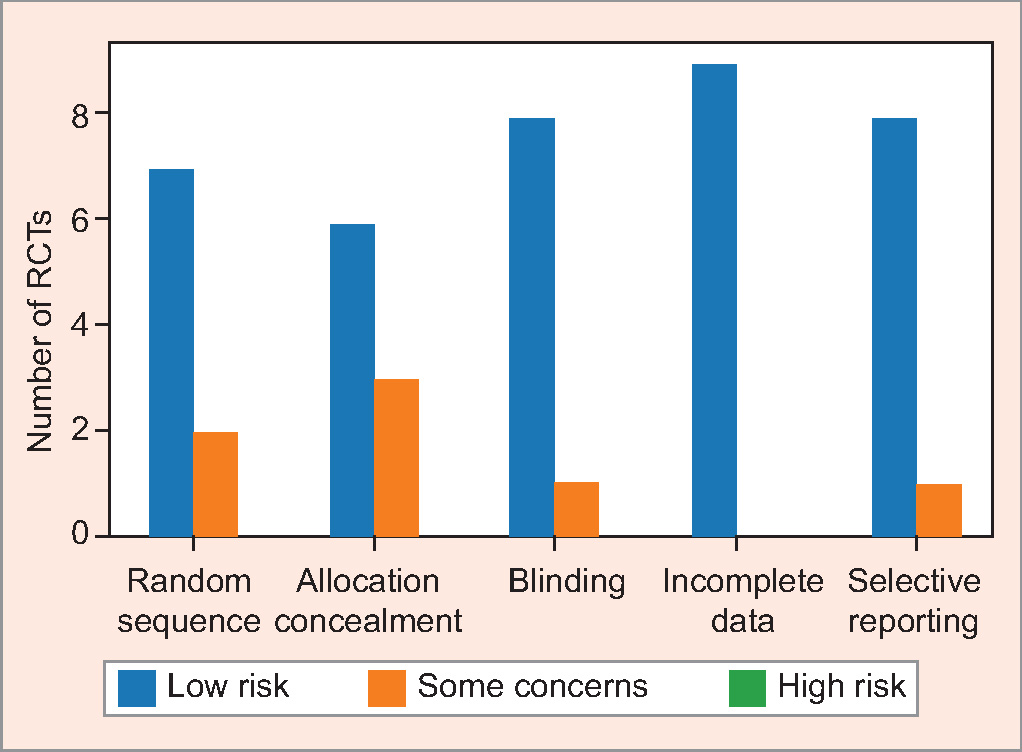
Fig. 1: Risk of bias assessment of included RCTs (2016–2025)
DISCUSSION
This systematic review critically evaluates evidence derived exclusively from RCTs published between 2016 and 2025 assessing the role of prophylactic antibiotics following routine dental extraction. Restricting analysis to contemporary RCTs strengthens internal validity while ensuring applicability to modern surgical protocols and antimicrobial stewardship principles. Across included trials, the cumulative evidence consistently demonstrates limited clinical justification for routine antibiotic administration in healthy patients undergoing simple intra-alveolar extraction.
Postextraction Infection Outcomes
The principal rationale for prescribing prophylactic antibiotics in dental extraction is prevention of postoperative infection and alveolar osteitis. However, contemporary randomized evidence consistently reports low baseline infection rates regardless of antibiotic exposure.
Yousuf et al. conducted one of the earliest modern RCTs evaluating prophylactic antibiotics after simple dental extraction and found no statistically significant difference in postoperative infection or dry socket incidence between antibiotic and control groups, despite routine postoperative administration.1 Infection occurrence remained minimal in both groups, suggesting that uncomplicated extraction inherently carries low infectious risk.
Similarly, Gbotolorun et al. performed a RCT assessing systemic antibiotic prophylaxis following intra-alveolar extraction and demonstrated comparable wound healing outcomes between intervention and placebo groups.2 The absence of significant benefit despite antibiotic coverage indicates that microbial contamination alone may not be the primary determinant of postoperative complications.
Sidana et al. further reinforced these findings in a randomized trial comparing multiple prophylactic strategies, including preoperative antibiotics, postoperative antibiotics, and no antibiotic therapy. No statistically significant differences were observed in infection, swelling, or pain outcomes across groups.3 Importantly, this study highlighted that surgical technique and postoperative care likely exert greater influence on healing than antimicrobial therapy.
More recent trials continue to demonstrate similar trends. Cinquini et al. reported no surgical site infections in either antibiotic or nonantibiotic groups following nonimpacted tooth extraction, emphasizing the extremely low complication rate associated with routine procedures.4 Likewise, Sivakumar et al., in a triple-blind RCT, found no improvement in socket healing or reduction in alveolar osteitis with antibiotic use.5
Xu and Chao confirmed these findings in a double-blind randomized trial showing no statistically significant reduction in postoperative complications, including alveolitis and inflammatory symptoms, among patients receiving antibiotics compared with placebo.6 Erfan et al. subsequently demonstrated comparable dry socket incidence between groups and reported increased postoperative swelling among antibiotic recipients, raising concerns regarding unnecessary pharmacological exposure.7
The most robust contemporary evidence is provided by Choradia et al., whose triple-blind RCT involving 1,600 patients reported absence of major infections in both antibiotic and control groups, strongly indicating that prophylactic antibiotics do not influence clinical outcomes following simple exodontia.8 These RCTs demonstrate remarkable consistency: routine antibiotic prophylaxis does not significantly reduce postoperative infection after uncomplicated dental extraction.
Effects on Pain, Swelling, and Healing
Antibiotics are frequently prescribed with the expectation of reducing postoperative inflammation and discomfort. Nevertheless, randomized evidence included in this review does not support this assumption.
Sidana et al. observed no meaningful differences in postoperative pain or swelling among antibiotic and nonantibiotic groups.3 Comparable findings were reported by Sivakumar et al., where healing progression and symptom resolution were similar irrespective of antibiotic administration.5
Xu and Chao also demonstrated that antibiotics failed to improve postoperative recovery parameters such as edema, trismus, or functional limitation.6 Interestingly, Erfan et al. identified a statistically higher incidence of swelling among antibiotic users, suggesting that antibiotics may not only lack benefit but could potentially contribute to adverse inflammatory responses.7
Although Kareem et al. reported improved pain reduction and faster socket healing with antibiotic therapy, interpretation must be cautious due to smaller sample size and limited population diversity.9 The absence of corroboration across larger RCTs reduces confidence in generalized clinical applicability.
Overall, RCT evidence indicates that postoperative discomfort primarily reflects surgical trauma rather than bacterial infection, thereby limiting the biological rationale for routine antimicrobial use.
Comparison of Antibiotic Regimens
Variation in antibiotic regimens across trials provides additional insight into prescribing practices. Included RCTs assessed preoperative dosing, postoperative multi-day regimens, and combined approaches. Despite these differences, outcomes remained consistently similar between intervention and control groups.
Cinquini et al. demonstrated uneventful healing irrespective of antibiotic therapy duration,4 while Choradia et al. showed no advantage even with postoperative antibiotic courses in a large patient cohort.8 These findings suggest that altering dosage or duration does not meaningfully influence clinical outcomes when infection risk is inherently low.
The convergence of findings across differing protocols strengthens the conclusion that lack of benefit is not regimen-specific but reflects limited necessity of antibiotics themselves.
Adverse Effects and Safety Considerations
An essential component of critical appraisal involves evaluating treatment harm. Several RCTs reported antibiotic-associated adverse effects, predominantly gastrointestinal disturbances.
Although generally mild, such reactions were absent in control groups across studies including Yousuf et al. and Xu and Chao.1,6 Given the absence of demonstrable infection prevention, even minor adverse events become clinically relevant when large patient populations are exposed unnecessarily.
Furthermore, widespread antibiotic prescribing contributes indirectly to antimicrobial resistance—an issue increasingly emphasized within dental practice. While resistance outcomes were not primary endpoints within individual RCTs, unnecessary exposure identified across trials supports antimicrobial stewardship initiatives advocating restricted use.
Methodological Strengths of Included Randomized Controlled Trials
The included studies exhibit several methodological strengths enhancing reliability of conclusions:
-
Double- or triple-blind study designs reducing performance and detection bias.5,8
-
Placebo or no-treatment control groups enabling true efficacy assessment.2,6
-
Inclusion of healthy patient populations representative of routine dental practice.
Large-scale trials such as Choradia et al. significantly improve statistical power, addressing limitations seen in earlier small-sample studies.8
Critical Interpretation
Across nine contemporary RCTs, the central finding remains unequivocal: prophylactic antibiotics provide no consistent or clinically significant reduction in postoperative complications following routine dental extraction.
The persistence of antibiotic prescribing despite strong randomized evidence may reflect entrenched clinical habits, perceived medico-legal protection, or overestimation of infection risk. However, when intervention benefit is negligible and adverse exposure measurable, continuation of routine prophylaxis becomes difficult to justify.
From an evidence-based perspective, atraumatic surgical technique, sterile operating conditions, and adequate postoperative instructions appear more influential determinants of healing than systemic antibiotics.
Limitations
Several limitations should be considered when interpreting the findings of this review. Although only RCTs published between 2016 and 2025 were included, heterogeneity existed among studies regarding antibiotic type, dosage, timing, and duration of administration, which may influence comparability of outcomes across trials.2,6,8 Variations in surgical technique, operator experience, and extraction difficulty were not uniformly standardized and may independently affect postoperative healing and complication rates irrespective of antibiotic use.3,5
Most included trials evaluated healthy individuals undergoing uncomplicated dental extraction; therefore, the findings cannot be generalized to medically compromised or immunocompromised patients or those requiring antibiotic prophylaxis for systemic indications.1,7 Follow-up periods were relatively short, typically limited to early postoperative healing, potentially overlooking delayed complications. Additionally, the overall incidence of postoperative infection was low across studies, which may reduce statistical power to detect small treatment effects.
Finally, although methodological quality was generally high, minor risks of bias related to reporting of allocation concealment were observed in some trials.4,9 The absence of quantitative meta-analysis further limits estimation of pooled effect size. Future large multicenter trials with standardized outcome reporting are warranted to strengthen clinical recommendations.
CONCLUSION
Randomized controlled trials published between 2016 and 2025 consistently demonstrate that prophylactic antibiotics do not significantly reduce postoperative infection or improve healing following uncomplicated dental extraction. Routine antibiotic prescription should therefore be discouraged in favor of evidence-based antimicrobial stewardship and individualized risk assessment. Emphasis should shift toward atraumatic surgical technique, effective irrigation, and appropriate postoperative instructions rather than routine pharmacologic prophylaxis.
REFERENCES
1. Yousuf W, Khan M, Mehdi H. Role of prophylactic antibiotics in simple dental extraction. Scientifica (Cairo) 2016;2016:1–6. DOI: 10.1155/2016/2932697
2. Gbotolorun OM, Olojede AC, Arotiba GT. Antibiotic prophylaxis in intra-alveolar extraction: randomized controlled trial. Int J Oral Maxillofac Surg 2016;45(9):1149–1154. DOI: 10.1016/j.ijom.2006.01.003
3. Sidana S, Mistry Y, Gandevivala A. Antibiotic prophylaxis during routine intra-alveolar extraction. J Evid Based Dent Pract 2017;17(3):184–190. DOI: 10.1016/j.jebdp.2017.04.007
4. Cinquini C, Marchionni S, Derchi G, et al. Antibiotic therapy following tooth extraction: randomized clinical trial. Oral Dis 2020;26(6):1212–1219. DOI: 10.1111/odi.13607
5. Sivakumar S, Umesh K, Muthu KR, et al. Necessity of antibiotic administration after dental extraction: triple-blind RCT. J Evol Med Dent Sci 2021;10(12):889–894. DOI: 10.14260/jemds/2021/524
6. Xu H, Chao J. Antibiotics in prevention of postoperative complications after extraction. BMC Oral Health 2022;22:214–220. DOI: 10.3390/dj13030107
7. Erfan O, Khan M, Taka G. Antibiotic usage after simple extraction in healthy patients. Open Dent J 2023;17:1–8. DOI: 10.2174/18742106-v17-230621-2022-170
8. Choradia S, Andrade N, Choudhary Y, et al. Triple-blind randomized clinical trial evaluating antibiotics in simple exodontia. J Pharm Bioallied Sci 2025;17(Suppl 1):S45–S52. DOI: 10.4103/jpbs.jpbs_1821_24
9. Kareem AA, Mizher S, Amer A, et al. Comparative evaluation of antibiotics after routine extraction. Int J Med Sci Dent Health 2025;11(2):101–107. DOI: 10.18231/j.ijohd.2020.057
________________________
© The Author(s). 2025 Open Access. This article is distributed under the terms of the Creative Commons Attribution-NonCommercial 4.0 International License (https://creativecommons.org/licenses/by-nc/4.0/). This license permits non-commercial use, distribution, and reproduction in any medium, provided the original author and source are credited, a link to the license is included, and any changes are indicated.